The Silkland DP80 DisplayPort Cable review is most relevant to desktop gamers who need a short connection between DisplayPort-equipped hardware and want headroom for high-resolution, high-refresh-rate modes.
Its 1.6-foot length makes desk layout and port placement important parts of the buying decision.
Silkland DP80 Cable Review Summary
The quick verdict
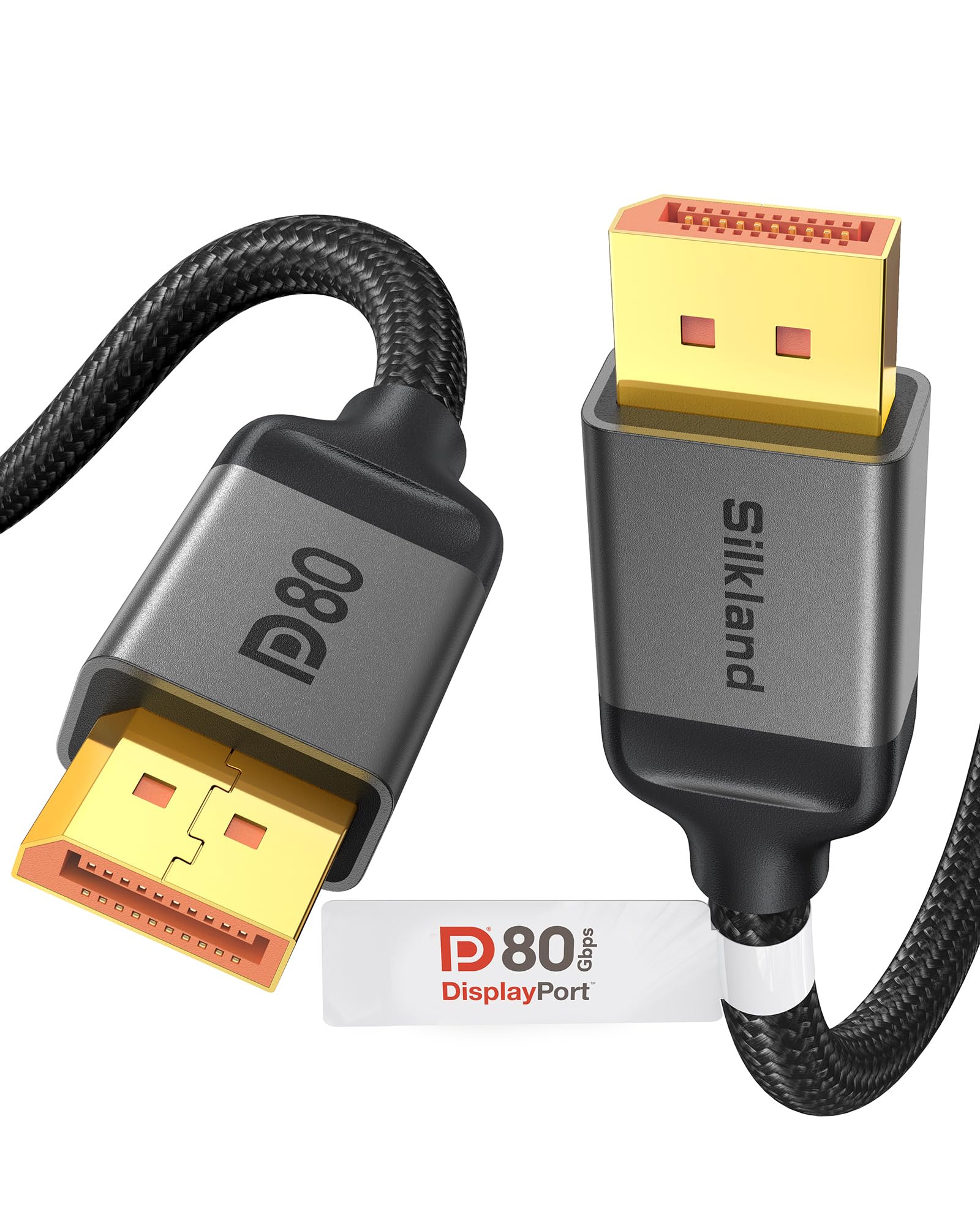
2,000+ ratings
Read Amazon ReviewsSilkland DP80 DisplayPort Cable
A short DisplayPort cable for gamers and desktop users pairing DP 2.1 equipment who want a compact connection and high refresh-rate support.
- VESA-certified DisplayPort 2.1 cable with up to 80 Gbps bandwidth and backward compatibility with DP 2.0 and DP 1.4.
- Supports uncompressed 4K at 240 Hz, 8K at 60 Hz, and 2K at 540 Hz; with DSC enabled, supports up to 16K at 60 Hz, 8K at 240 Hz, and 4K at 540 Hz.
- Described support for Dynamic HDR10+, 3D, HDCP 2.3, VRR, FEC, ALLM, DSC 1.2a, MST, and uncompressed multichannel audio pass-through.
- Male-to-male DisplayPort connectors, no-latch design, and 1.6-foot length for a compact connection.

Pros
- High stated bandwidth and refresh-rate support for compatible DP 2.1 gaming hardware.
- Short length can reduce excess cable slack when the source and display sit close together.
Consider before buying
- The 1.6-foot reach can be restrictive if ports are far apart or the cable needs to route behind furniture.
- The highest resolution and refresh-rate modes depend on matching support across the computer, monitor, and settings.
Read the full review summary
This VESA-certified DP 2.1 cable is built around up to 80 Gbps bandwidth and support for demanding display modes, including uncompressed 4K at 240 Hz, 8K at 60 Hz, and 2K at 540 Hz.
With Display Stream Compression enabled, the described ceiling reaches up to 16K at 60 Hz, 8K at 240 Hz, or 4K at 540 Hz.
Those are capability limits, not guaranteed outcomes: the graphics card, monitor, settings, and connection must also support the mode.
The short length suits a close desktop setup where a long cable would create slack, while its male-to-male DisplayPort connectors, backward compatibility, and claimed support for variable refresh features make it a practical candidate for a gaming monitor.
Check your hardware’s DisplayPort version and the distance between its ports before buying; buyers seeking a connection across a room or a flexible multi-device setup should consider the physical constraints carefully.
The buying factors
Silkland DP80 Cable Scorecard
Editorial scores reflect listed features and buyer fit; they are not laboratory measurements or customer ratings.
Bandwidth headroom
Up to 80 Gbps and support for high refresh-rate display modes give compatible DP 2.1 setups substantial stated capacity.
Gaming feature fit
The described support includes VRR, ALLM, FEC, DSC 1.2a, G-Sync, and FreeSync, subject to the connected hardware.
Cable reach
At 1.6 feet, it is suited to nearby devices and offers limited room for routing or repositioning.
Build details
Tinned copper conductors, triple shielding, a nylon exterior, and gold-plated connectors are useful design choices for a desktop cable.
Device flexibility
It is a male-to-male DisplayPort cable with backward compatibility, but it requires DisplayPort ports at both ends.
Setup simplicity
The no-latch plug design is intended to simplify connection and removal, particularly where access is tight.
Key Features and Specifications of Silkland DP80 Cable
- VESA-certified DisplayPort 2.1 cable with up to 80 Gbps bandwidth and backward compatibility with DP 2.0 and DP 1.4.
- Supports uncompressed 4K at 240 Hz, 8K at 60 Hz, and 2K at 540 Hz; with DSC enabled, supports up to 16K at 60 Hz, 8K at 240 Hz, and 4K at 540 Hz.
- Described support for Dynamic HDR10+, 3D, HDCP 2.3, VRR, FEC, ALLM, DSC 1.2a, MST, and uncompressed multichannel audio pass-through.
- Male-to-male DisplayPort connectors, no-latch design, and 1.6-foot length for a compact connection.
- 28 AWG tinned copper conductors, triple shielding, 24K gold-plated connectors, and a nylon exterior.
- Intended for DisplayPort-equipped computers, graphics cards, and monitors; the description includes a 24-month service period and technical support.
Pros and Cons of Silkland DP80 Cable
Pros
- High stated bandwidth and refresh-rate support for compatible DP 2.1 gaming hardware.
- Short length can reduce excess cable slack when the source and display sit close together.
- Backward compatibility can help connect with DP 2.0 or DP 1.4 equipment.
- Shielding, tinned copper, and a nylon exterior address durability and interference considerations.
Consider before buying
- The 1.6-foot reach can be restrictive if ports are far apart or the cable needs to route behind furniture.
- The highest resolution and refresh-rate modes depend on matching support across the computer, monitor, and settings.
- Both connected devices need DisplayPort ports; this cable does not serve a setup that requires HDMI at either end.
Who Should Buy Silkland DP80 Cable?
Good fit
Consider the Silkland DP80 if you have a close-set PC and monitor with DisplayPort connections and want a cable specified for high refresh rates.
Its 80 Gbps rating and listed DP 2.1 modes leave room for demanding configurations, while backward compatibility may also suit a system using an earlier DisplayPort generation.
Measure the actual port-to-port path, including bends and the route around the monitor stand, before choosing this length.
If your hardware supports variable refresh or compression features, verify the relevant settings on both ends; the cable alone cannot enable a mode that the devices do not support.
For a compact desk setup, the no-latch connector and stated construction details add practical appeal.
The service period is another consideration if you prefer a cable backed by support, though the useful fit still depends primarily on your ports, display modes, and required reach.
Who should skip it
Choose a longer cable if the computer and display are separated, mounted at different heights, or need a route with extra slack. At 1.6 feet, this model is designed for a short link.
Skip it if either device only provides HDMI or another connection type, or if you need a cable to guarantee a particular resolution and refresh rate regardless of your hardware.
Confirm supported modes on the source and display first.
How the Silkland DP80 Cable fits a gaming setup
A high ceiling that depends on the whole display chain
The DP80’s headline appeal is its stated 80 Gbps capacity, alongside examples from uncompressed 4K at 240 Hz to 8K at 60 Hz. DSC expands the listed upper modes further.
These figures help identify the cable’s intended class, but they do not mean every combination will work with every computer and monitor. Confirm the display’s input, graphics output, and mode requirements before relying on a specific target.
Short reach works best when the layout is settled
A 1.6-foot cable can keep a close desktop connection tidy and avoid managing a loop of unused length.
That advantage becomes a constraint when ports face away from each other, the PC sits under a desk, or the display needs to move.
Measure the route with enough allowance for gentle bends and the way the devices are positioned.
Gaming features require compatible settings
The cable description names VRR, ALLM, FEC, DSC, G-Sync, and FreeSync, alongside HDR and audio pass-through.
These features are relevant to gaming and multimedia setups, but their practical use depends on support from the graphics card, display, and software configuration.
Treat them as compatibility targets to check rather than automatic improvements from changing the cable.
Construction choices for everyday desktop use
Triple shielding and tinned copper conductors are intended to support signal integrity, while a nylon exterior and gold-plated connectors provide specific material and connector choices. The no-latch design may make disconnection easier in a cramped area.
These details are useful when comparing cable designs, although they do not replace checking reach and port compatibility.
Alternatives to Silkland DP80 Cable
Computer DisplayPort Cables alternative
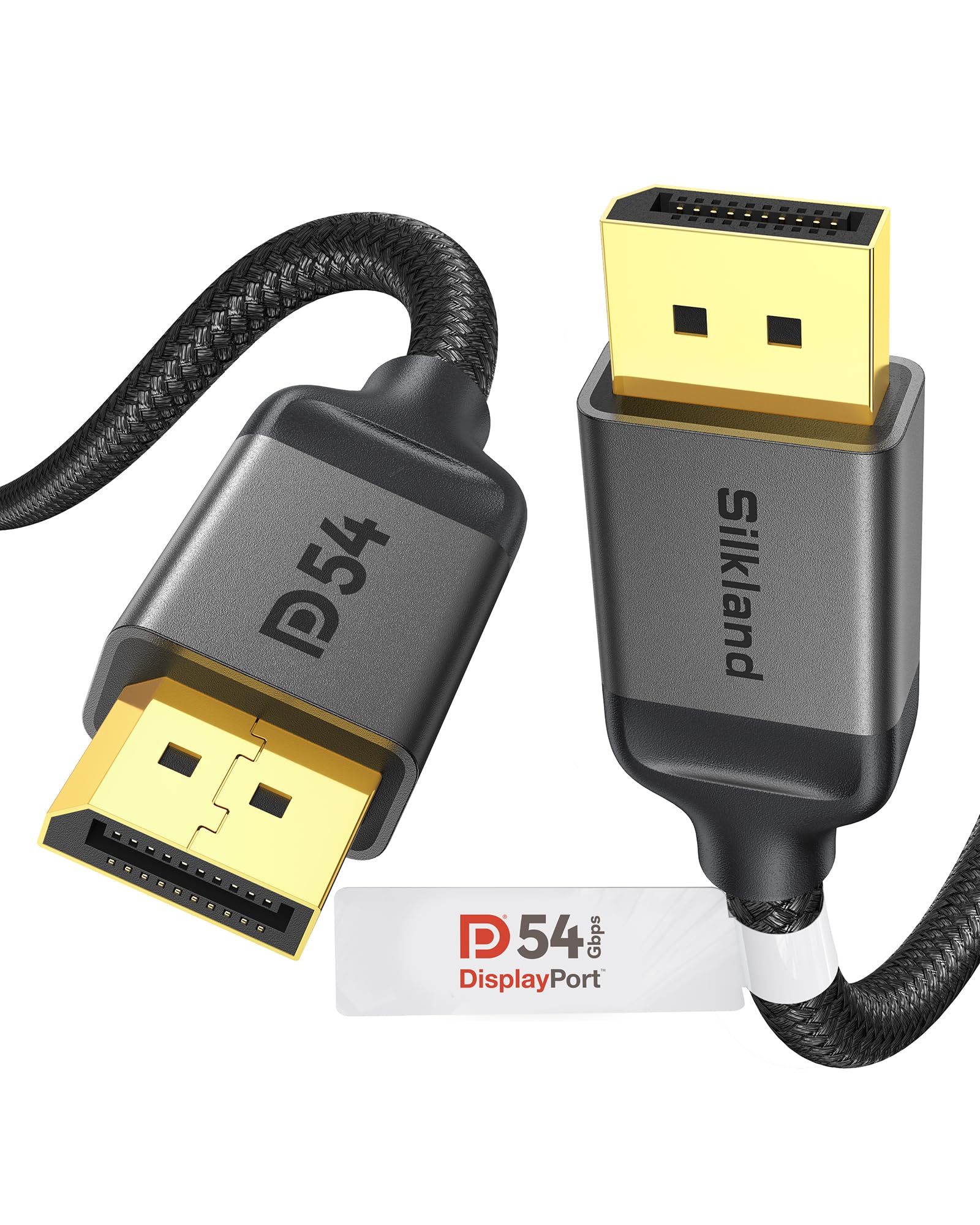
7,000+ ratings
Read Amazon ReviewsSilkland 54Gbps DisplayPort 2.1 Cable, 10 ft
Choose the DP80 when the devices are close together and its higher stated bandwidth suits your target modes.
The 10-foot option is the more practical fit when you need substantially more reach and its listed bandwidth and display modes match your setup.
- This Silkland cable is 10 feet long and specifies 54 Gbps bandwidth, with support for 16K at 60 Hz using DSC, 8K at 120 Hz, and 4K at up to 240 Hz.
- The DP80 offers up to 80 Gbps bandwidth and a short 1.6-foot length for close-set devices.
Is Silkland DP80 Cable Worth It?
The Silkland DP80 DisplayPort Cable is worth considering for a nearby PC-to-monitor connection when both devices have DisplayPort ports and you want high stated bandwidth for a gaming display.
Its VESA certification, backward compatibility, and listed gaming features make it a capable-looking fit for compatible hardware.
The decisive tradeoff is reach: 1.6 feet leaves little room for a spread-out or frequently rearranged setup.
Measure your route and confirm the source and monitor support the desired mode before buying; if those checks fit, this short cable is a sensible option to consider.
Your review at a glance
2,000+ ratings
Read Amazon ReviewsSilkland DP80 DisplayPort Cable
A short DisplayPort cable for gamers and desktop users pairing DP 2.1 equipment who want a compact connection and high refresh-rate support.
- VESA-certified DisplayPort 2.1 cable with up to 80 Gbps bandwidth and backward compatibility with DP 2.0 and DP 1.4.
- Supports uncompressed 4K at 240 Hz, 8K at 60 Hz, and 2K at 540 Hz; with DSC enabled, supports up to 16K at 60 Hz, 8K at 240 Hz, and 4K at 540 Hz.
- Described support for Dynamic HDR10+, 3D, HDCP 2.3, VRR, FEC, ALLM, DSC 1.2a, MST, and uncompressed multichannel audio pass-through.
- Male-to-male DisplayPort connectors, no-latch design, and 1.6-foot length for a compact connection.